On this page
No. A budget or mid-range incubator can hatch 75–90% of fertile, fresh eggs if it has three things: a fan (forced air), an automatic turner, and a readable humidity display, checked against a second thermometer. Premium machines earn their price with automatic humidity control, alarms and long-term consistency. That matters most for rare breeds, expensive shipped eggs, and frequent hatching.
What actually decides whether eggs hatch?
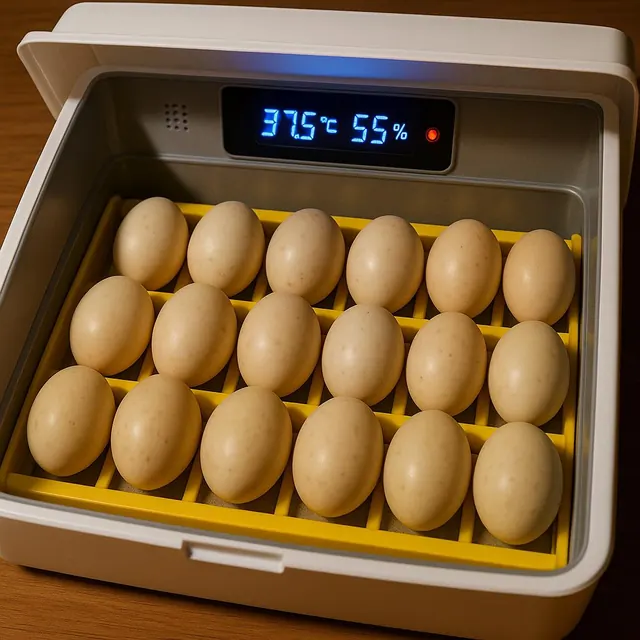
Steady temperature, sensible humidity, regular turning and fertile, fresh eggs decide most hatches. Price only matters to the extent it buys those things. A forced-air incubator at 99.5°F (37.5°C) in a stable room does the core job whether it costs a little or a lot. University of Kentucky extension guidance gives a forced-air range of only 99–100°F, so the real question is whether a machine holds that range reliably, not how many buttons it has.
The biggest difference between cheap and expensive models is consistency over time. Budget sensors can be 1–2°F off from day one and drift with age. That is fixable with a separate thermometer and hygrometer that cost far less than the price gap between tiers.
Feature by feature: what is worth paying for?
Here is how each common feature ranks for a home hatcher. "Pay for it only if" means the feature is worth the upgrade in specific situations, not for everyone.
| Feature | Verdict | Why |
|---|---|---|
| Automatic turner | Must-have | Saves 50+ manual turns per chicken hatch and turns more evenly than hand turning. Make sure it can be switched off or removed for lockdown. |
| Forced-air fan | Must-have | Keeps every egg at the same temperature. Still-air units work but need 101–102°F at the top of the eggs and more attention. |
| Humidity display | Must-have | You can't manage what you can't see. Check it once with a salt test, since many sensors read 5–10 points off. |
| External water fill | Nice-to-have | Lets you add water without opening the lid, which matters most during lockdown. Cheap to find even on budget models. |
| Alarms | Nice-to-have | High and low temperature or humidity alerts catch a failed heater or empty reservoir before it costs a hatch. |
| Automatic humidity pump | Pay for it only if | You hatch often, live in a very dry or very humid climate, or are setting rare or shipped eggs where every percent counts. |
| Programmable cooling | Pay for it only if | You hatch a lot of duck or goose eggs and want the daily cooling period automated instead of done by hand. |
| Large capacity (40+ eggs) | Pay for it only if | You hatch for sale, run a breeding program, or regularly fill the machine. Half-empty big incubators are no better than small ones. |
What do you get at each price level?
Incubators fall into three rough tiers. Exact models and current prices change often, so check our current incubator picks for specific recommendations.
Budget (under $60)
Small tabletop units, often 9–24 chicken eggs, usually with a fan, auto turner and a combined temperature and humidity display. Water goes in by lifting the lid on many models. Expect sensor accuracy to vary, so budget a separate thermometer and hygrometer. Fine for a first hatch, a classroom, or a dozen quail eggs.
Mid-range ($100–150)
Better insulation, more reliable sensors, external water fill, temperature alarms and turners that stop automatically at lockdown. This is the sweet spot for backyard keepers who hatch once or twice a year and want fewer surprises.
Premium ($400+)
Automatic humidity pumps, programmable schedules for different species, cooling cycles for waterfowl, and solid build quality that holds settings season after season. These machines earn their price with rare breeds, expensive shipped eggs, and keepers who hatch every few weeks.
Best upgrade for any budget: a separate calibrated thermometer and hygrometer placed at egg height. It fixes the weakest point of a budget incubator and double-checks an expensive one.
When is an expensive incubator worth it?
A premium machine is worth it when the eggs cost more than the incubator's upgrade, or when you hatch so often that convenience adds up. Common cases:
- Rare or show breeds where a single lost egg is costly or hard to replace.
- Shipped eggs, which often hatch at 50% or less even in good conditions, so every other variable needs to be tight.
- Waterfowl hatches where 28–35 days of humidity management and daily cooling become a chore.
- Frequent or overlapping hatches, where automatic humidity and alarms save hours of checking.
For a first hatch of chicken or quail eggs from a local flock, a well-placed budget or mid-range model is enough. Put your effort into a careful setup and test run, accurate readings, and good humidity management. If you plan to hatch quail in a tight space, see hatching quail in an apartment. Those habits carry over to any machine you buy later.
Frequently asked questions
Will a cheap incubator hatch eggs?
Yes, if it has a fan and turner and you verify its temperature with a second thermometer at egg height. Most budget-incubator failures trace back to inaccurate sensors, a poor room location, or too much lid opening rather than the machine itself. See our list of common first-hatch mistakes.
Is an automatic turner necessary?
Not strictly, but it is the one feature we treat as essential. Hand turning means 3–5 turns a day, every day, until lockdown. Missed turns in the first week hurt hatch rates, and an auto turner removes that risk for a small price difference.
Is automatic humidity control worth the money?
Only for some keepers. Humidity is forgiving over a few days, so manual water top-ups work for most hatches. Automatic pumps pay off in very dry or humid climates, for frequent hatching, and with rare or shipped eggs where every point of hatch rate matters.
Still-air or forced-air incubator for a beginner?
Forced-air. A fan keeps the temperature even across the tray, so 99.5°F means the same thing for every egg. Still-air units layer warm air at the top and need 101–102°F measured at the top of the eggs, which is easier to get wrong.
What size incubator should I buy first?
A 12–24 egg tabletop model covers most first hatches. Large cabinet incubators hold temperature better when full, but they offer little advantage when half-empty and take more space and power. Buy for the hatch size you will actually run.