On this page
Incubate duck eggs at 99.5°F (37.5°C) with 55–60% humidity, turning 3–5 times a day. Most ducks lock down on day 25 (raise humidity to 65–75%, stop turning) and hatch on day 28. Muscovy eggs take 35 days, with lockdown on day 32. Many keepers also cool and mist the eggs once a day from about day 10. Expect 24–48 hours from pip to hatch.
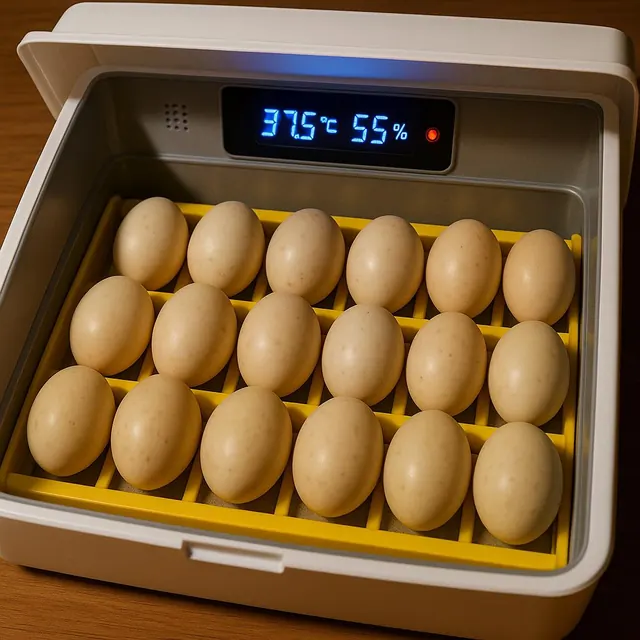
Duck egg incubation settings: standard ducks vs Muscovy
Every domestic duck breed incubates at 99.5°F. The difference between breeds is length: ducks descended from the mallard (Pekin, Khaki Campbell, Indian Runner, Cayuga, Rouen and others) take 28 days, while Muscovy, a separate species, take 35.
| Setting | Most duck breeds | Muscovy |
|---|---|---|
| Temperature | 99.5°F (37.5°C) | 99.5°F (37.5°C) |
| Humidity to lockdown | 55–60% | 55–60% |
| Turning | 3–5×/day, days 1–24 | 3–5×/day, days 1–31 |
| Candle | Day 7 and day 14 | Day 7–10 and day 21 |
| Optional cooling and misting | About day 10 to day 24 | About day 10 to day 31 |
| Lockdown | Day 25 | Day 32 |
| Lockdown humidity | 65–75% | 65–75% |
| Expected hatch | Day 28 | Day 35 |
Enter your set date in the hatch date calculator to get every candling, lockdown and hatch date on a calendar. For other species, see the full settings chart.
Why duck eggs are different from chicken eggs
Duck eggs need more humidity, more room and more patience than chicken eggs. The temperature is the same, but almost everything else shifts a little:
- Thicker shell membranes. Ducklings have tougher membranes to break through, which is one reason pip-to-hatch takes longer and why a dry membrane is a bigger risk.
- Bigger eggs. Larger embryos produce more of their own heat late in incubation, one reason many keepers cool the eggs once a day.
- More fat in the yolk. Duck eggs carry a richer yolk than chicken eggs, fuel for the extra week of development.
- Higher humidity. 55–60% before lockdown instead of 40–50%. Under a broody duck, eggs are also kept moist by a hen returning from the water.
How to clean dirty duck eggs before incubating
Prevent dirty eggs rather than cleaning them: give ducks deep, fresh nesting material and collect eggs early in the morning, because ducks usually lay overnight or at dawn. Dirty eggs carry bacteria that can rot an egg and contaminate the rest of the incubator.
- Lightly soiled: dry-brush or gently rub off the dirt with a dry cloth or fine sandpaper. This keeps the protective bloom mostly intact.
- Avoid washing. Water removes the bloom and can pull bacteria through the pores into the egg.
- If you must wash: use water that is warmer than the egg, wipe quickly, and dry immediately. Cooler water makes the egg contents contract and draws water and bacteria inward. Never soak eggs.
- Very dirty, cracked or misshapen eggs: don't set them. They're the eggs most likely to rot and burst.
How many duck eggs fit in an incubator?
Expect about two-thirds of the chicken capacity or fewer. Duck eggs are larger and longer, so they won't sit properly in chicken slots and the turner may not tilt them evenly. Check whether your incubator includes a duck or large-egg tray, and use the manufacturer's duck figure rather than the headline chicken number. Our incubator recommendations list which models handle waterfowl eggs. Many keepers incubate duck eggs on their sides, which matches how they're positioned in a duck tray.
Cooling and misting duck eggs: schedule and method
Cooling and misting is optional. Many keepers do it once a day from about day 10 until lockdown, and it's most useful in dry climates or if your eggs are losing moisture slowly. It imitates a broody duck leaving the nest to feed and bathe.
- Open the lid (or take the tray out) once a day, at the same time each day.
- Mist lightly with lukewarm water from a clean spray bottle, enough to dampen the shells, not drench them.
- Leave the lid open for 10–15 minutes. The eggs should feel slightly cool, not cold.
- Close up and let the incubator recover. The temperature dip is expected; don't turn the thermostat up to compensate.
- Stop at lockdown. From day 25 (Muscovy day 32) the lid stays closed.
Skip it if you're unsure. Plenty of duck hatches succeed without any cooling or misting. Steady temperature and correct humidity matter far more. If you do mist, keep the spray bottle clean so you're not adding bacteria to the shells.
Candling duck eggs
Duck eggs are easier to candle than most chicken eggs because many breeds lay white, cream or pale green shells. On day 7 a fertile egg shows a dark spot with spidery veins; on day 14 it's mostly dark with a clear air cell at the blunt end. Remove clear eggs, blood rings and anything that smells. Dark-shelled eggs, such as early-season Cayuga eggs, are harder; use a brighter light. The candling guide shows each stage.
Humidity and weight loss: the 13–15% target
Aim for duck eggs to lose about 13–15% of their starting weight by lockdown. Weigh the eggs together on day 0 and then every few days. If they're losing weight too slowly (a small air cell, eggs barely lighter), lower humidity. If they're losing too quickly (a large air cell early), raise it. Weight loss is a more reliable guide than a hygrometer reading, especially as cheap hygrometers drift. The incubator humidity guide has the method and a worked example.
Duck egg hatch timeline: be patient
Ducklings take longer to hatch than chicks. Expect 24–48 hours from external pip to hatch, and long rests in between. That's normal, and it's the stage where impatient hatchers do the most damage.
- Day25
Lockdown
Stop turning, lay eggs flat, raise humidity to 65–75%, close the lid.
Lid closed - Day25–26
Internal pip
The duckling breaks into the air cell and starts breathing air. You may hear peeping.
- Day26–27
External pip
A small hole or crack appears. Then the duckling may rest for many hours.
- Day28
Zip and hatch
The duckling cracks around the shell and pushes out. Leave it until dry, up to 24 hours.
For Muscovy, add 7 days to each step: lockdown on day 32 and hatch around day 35. Give stragglers two extra days before candling and deciding. If a duckling has made no progress for well over 24 hours after its external pip and the membrane has turned dry and papery, read when and how to help a stuck chick before you intervene.
Brooding ducklings
Ducklings need a brooder at 90–95°F in week 1, then about 5°F less each week as they feather out. They grow quickly and make a lot of mess, so plan for space and easy cleaning.
- Water: deep enough for ducklings to dip their whole bill and clear their nostrils, but not deep enough to climb in and swim. A chick waterer with a deeper trough, or a narrow container with a guard, works well.
- No unsupervised swimming until they're feathered. Ducklings without a mother aren't waterproof, chill quickly and can drown. Short, supervised paddles in warm, shallow water are fine once they're a week or two old.
- Feed: a waterfowl starter, or a non-medicated chick starter with added niacin (brewer's yeast is the usual addition). Ducklings need more niacin than chicks.
- Bedding: change it often. Ducklings splash water everywhere, and wet bedding chills them. Put the waterer on a raised wire or tray to catch spills.
Choosing breeds for your next hatch? Compare Khaki Campbells, Pekins and Muscovies in our breed comparisons, and see what a small duck flock costs.
Frequently asked questions
How long do duck eggs take to hatch?
Most duck breeds, including Pekin, Khaki Campbell, Indian Runner and Cayuga, hatch in 28 days at 99.5°F. Muscovy ducks take 35 days. Lockdown starts 3 days before hatch: day 25 for most ducks and day 32 for Muscovy.
What humidity do duck eggs need?
Keep duck eggs at 55–60% relative humidity until lockdown, then raise it to 65–75% for the hatch. Check you're on target by weighing the eggs: they should lose about 13–15% of their starting weight by lockdown.
Do you have to mist duck eggs?
No. Misting is optional. Many keepers cool and mist duck eggs once a day from about day 10 until lockdown, opening the lid for 10–15 minutes and spraying lightly with lukewarm water. It's most helpful in dry climates. Steady temperature and correct humidity matter more.
How long does it take a duckling to hatch after pipping?
Usually 24–48 hours from external pip to hatch, often with long rests. That's longer than chickens. Keep the lid closed and humidity at 65–75%, and only consider helping if there's been no progress for well over 24 hours and the membrane has dried.
Should I wash duck eggs before incubating?
Avoid it. Washing removes the protective bloom and can draw bacteria into the egg. Dry-brush light dirt instead. If an egg must be washed, use water warmer than the egg, wipe quickly and dry it straight away. Never soak eggs, and don't set very dirty or cracked ones.
Can I incubate duck and chicken eggs together?
Yes, if you stagger the set dates so both reach lockdown on the same day: set duck eggs 7 days before chicken eggs. Humidity is the compromise, since ducks want 55–60% and chickens 40–50%. Many keepers run near 50% and weigh the eggs to check. At lockdown, use 65–70%.