On this page
Incubate quail eggs at 99.5°F (37.5°C) in a forced-air incubator with 45–50% humidity. Turn them 3–5 times a day, then stop turning and raise humidity to 65–70% at lockdown. Coturnix quail lock down on day 15 and hatch on day 17–18. Bobwhite lock down on day 21 and hatch on day 23–24. Use quail rails or a quail tray so the small eggs don't slip.
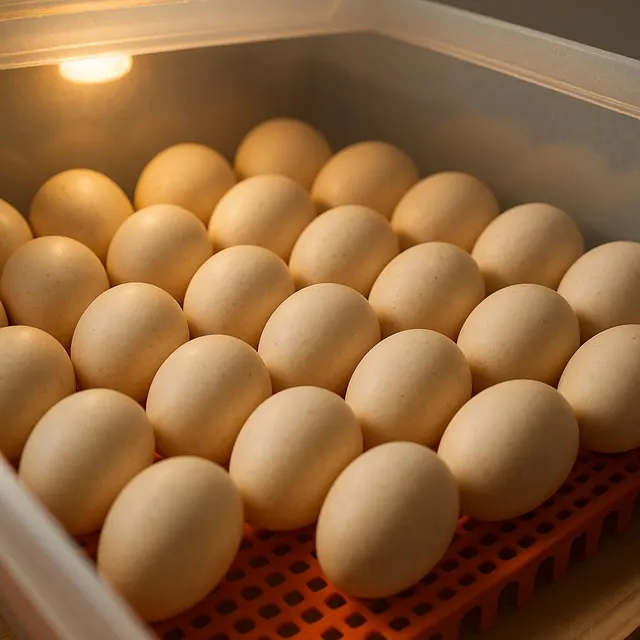
Quail incubator temperature and humidity by type
All quail incubate at the same 99.5°F as chickens. What changes is the number of days, and therefore when lockdown starts. Coturnix are by far the most common quail hatched at home.
| Quail | Days to hatch | Temperature | RH to lockdown | Lockdown RH | Stop turning |
|---|---|---|---|---|---|
| Coturnix (Japanese, Pharaoh, Jumbo, Texas A&M) | 17–18 | 99.5°F (37.5°C) | 45–50% | 65–70% | Day 15 |
| Bobwhite | 23–24 | 99.5°F (37.5°C) | 45–50% | 65–70% | Day 21 |
| Button quail (King / Chinese painted), approximate | 16–17 | 99.5°F (37.5°C) | 45–50% | 65–70% | Day 14 |
Penn State's 4-H embryology resources list Coturnix at 16–18 days; most home hatches land on day 17 or 18. Button quail figures vary more between keepers, so treat 16–17 days as a guide and watch for pips from day 15. Get exact dates for your set day from the hatch date calculator, and see the full settings chart for 9 species if you hatch more than quail.
Coturnix incubation schedule, day 0 to 18
Day 0 is the day you set the eggs. The big jobs are candling around day 7–8, lockdown on day 15 and the hatch on day 17–18.
- Day0
Set the eggs
Set room-temperature eggs pointy end down in quail rails or a quail tray. Note the date.
99.5°F · 45–50% RH - Day1–6
Hold steady
Turn 3–5 times a day or let the auto turner run. Top up water only as needed and keep lid openings short.
- Day7–8
Candle
Use a very bright light. Look for a dark mass with veins. Remove clear, cracked or leaking eggs.
Candle - Day9–13
Keep turning
Embryos grow fast now. If you weigh eggs, check you're on track for steady moisture loss.
- Day14
Prepare for lockdown
Get shelf liner or mesh ready, clean the hatching tray, and check you have water to raise humidity.
- Day15
Lockdown
Stop turning, lay eggs on a non-slip surface, cover floor gaps, raise humidity and close the lid.
65–70% RH · lid closed - Day16
Internal pips
You may hear peeping. A few early pips are normal.
- Day17
Main hatch
Most Coturnix hatch today, often within a few hours of each other.
Lid closed - Day18
Stragglers and brooder
Move dry chicks to the brooder. Give unhatched eggs until day 19–20 before candling and deciding.
Quail rails, trays and incubator capacity
Quail eggs need quail rails or a quail tray. A Coturnix egg is a fraction of the size of a chicken egg, so it rolls, tips or wedges sideways in chicken slots and can crack against its neighbors when the turner tilts.
- Rails are narrow dividers that fit into a roller-style or tilting turner. Check they're sized for your model.
- Quail trays have small individual cups and are the most secure option.
- Capacity: most incubators hold roughly 1.5–2 times as many quail eggs as chicken eggs, and sometimes more with a dedicated quail tray. Use the manufacturer's quail figure rather than guessing.
When comparing models, look for a quail tray in the box or as an add-on. Our incubator recommendations note which models offer one.
Candling speckled quail eggs
Candling quail eggs is hard: the shells are heavily speckled and the egg is small, so the embryo is easy to miss. Use the brightest light you have in a completely dark room and candle on day 7–8, when there's enough development to see.
- Fertile: a darker area with fine veins spreading from it, and a clear air cell at the blunt end.
- Clear: light passes evenly through the whole egg, apart from the speckles.
- Unsure: leave it in. A wrongly removed live egg costs more than an infertile egg left until hatch.
Many quail keepers skip candling and simply remove obvious problems: cracked, leaking or smelly eggs. The egg candling guide shows the same stages on easier-to-read chicken eggs, which helps you know what to look for.
Lockdown and hatch day
Lock down Coturnix on day 15 (Bobwhite on day 21): stop turning, raise humidity to 65–70% and keep the lid closed until the hatch is over. Quail hatch fast, and their chicks are tiny, so set the hatching space up before lockdown, not during it.
Set up for tiny chicks
- Cover gaps. Quail chicks can fall through the slots in a turner, into water channels, or through gaps around the floor. Cover water wells with mesh and block any gap a chick could squeeze into.
- Use a non-slip floor. Rubber shelf liner or fine mesh under the eggs gives chicks grip. On a smooth plastic floor they're prone to splayed legs.
- Remove the turner or switch it off and take the eggs out of the rails, so a hatching chick doesn't get caught.
What hatch day looks like
Coturnix often hatch in a burst: much of a clutch can come out within the same 12–24 hours, and chicks are moving around the incubator soon after. Leave chicks in until they're dry and fluffy, up to 24 hours, then move them in one quick trip. If a chick seems stuck, read when and how to help first, because opening the lid mid-hatch can shrink-wrap the others.
Short on room? Quail are the easiest birds to hatch in an apartment or spare corner. See hatching quail in small spaces for setups that work in a small home.
Brooder setup for quail chicks
Quail chicks need the same warmth as chicken chicks, about 95°F at chick level in week 1, then roughly 5°F less each week until they're feathered. Because they're so small, the details matter more.
- Water: use a shallow chick waterer and fill the trough with marbles or clean pebbles so chicks can drink but can't fall in and drown. This is the most common cause of early losses.
- Feed: a game bird or turkey starter, which is higher in protein than chick starter. Crumble it finer for the first few days if pieces are large.
- Flooring: paper towels or shelf liner for the first several days. Avoid slippery newspaper.
- Walls and lid: quail chicks are fast and can fly early. Use a brooder with solid sides and a mesh cover, and block gaps they could slip through.
Watch behavior rather than the thermometer alone: chicks huddled under the heat are cold, chicks pressed against the far wall are too hot.
Getting fertile quail eggs
The simplest source is your own flock. Coturnix hens start laying at about 6–8 weeks old, so a small group can be producing hatching eggs within two months. Keep at least one male with the hens (a common ratio is one male to 3–5 females) and collect eggs daily.
- Local breeders are the best outside source. Eggs that never travel by mail hatch better.
- Shipped eggs often hatch at 50% or less because the air cells are damaged in transit. Let shipped eggs rest pointy end down for 12–24 hours before setting.
- Grocery-store quail eggs are usually from hen-only flocks and refrigerated, so expect few or none to hatch.
- Storage: set eggs within 7 days, stored at 55–65°F pointy end down. Don't wash them.
Choosing a variety? Our breed comparisons cover Coturnix, Pharaoh, Texas A&M and other quail, and chicken math estimates what a small quail flock costs to run.
Frequently asked questions
How long do quail eggs take to hatch?
Coturnix quail eggs hatch in 17–18 days at 99.5°F, and Penn State lists a range of 16–18 days. Bobwhite quail take longer, 23–24 days. Button quail hatch in roughly 16–17 days. Count the day you set the eggs as day 0.
What temperature and humidity do quail eggs need?
Run a forced-air incubator at 99.5°F (37.5°C), or 101–102°F at the top of the eggs in a still-air model. Keep humidity at 45–50% until lockdown, then raise it to 65–70% for the hatch.
When do you stop turning quail eggs?
Stop turning Coturnix eggs on day 15, about 2–3 days before they hatch. Stop turning Bobwhite eggs on day 21 and button quail around day 14. Lay the eggs on a non-slip liner and keep the lid closed from then on.
Can I hatch quail eggs in a chicken egg incubator?
Yes. The temperature is the same, but you need quail rails or a quail tray so the small eggs don't roll or crack, and you must cover any gaps in the floor at lockdown because quail chicks are small enough to fall through them.
Can I hatch quail and chicken eggs together?
You can if you stagger the set dates so both reach lockdown together. Set chicken eggs first, then Coturnix 3 days later, and use quail rails for the quail. Both hatch near the same day, and lockdown humidity is the same 65–70%.
Why are my quail chicks drowning in the waterer?
Quail chicks are small enough to fall into a standard chick waterer and can't climb out. Fill the trough with marbles or clean pebbles so the water is only a few millimeters deep between them, and keep the brooder warm so a wet chick doesn't chill.