On this page
Yes, you can hatch store-bought eggs, and people have hatched chicks, ducklings and quail from grocery store cartons. The egg has to be fertile, though, and most standard supermarket chicken eggs aren't. Your best odds are eggs labeled "fertile", quail eggs from Asian or international markets, duck eggs, and farm-fresh eggs from flocks with a rooster.
Yes, it's been done: real store-bought eggs that hatched
This isn't just theory. Several well-documented hatches show that a grocery store egg can turn into a living bird:
- A quail from a Dutch supermarket (2016). Alwyn Wils incubated a dozen quail eggs from the Albert Heijn grocery chain in the Netherlands. After 19 days, one chick hatched, and he named it Albert after the store.
- Three ducklings from Waitrose (2020). In the UK, Charli Lello hatched three ducklings from a box of Waitrose duck eggs. Years earlier, in 2014, a teenager hatched a duckling from a half-dozen free-range Waitrose duck eggs.
- A duckling from a free-range egg (2021). Adele Phillips in England bought free-range duck eggs at the grocery store, incubated them, and hatched a healthy duckling.
- Chicks from Trader Joe's fertile eggs. Trader Joe's has sold cartons labeled "fertile." A TikTok user incubated a dozen and hatched chickens, and others have reported the same on YouTube.
Notice the pattern: these are quail eggs, duck eggs, free-range eggs, or eggs labeled "fertile." That's not a coincidence.
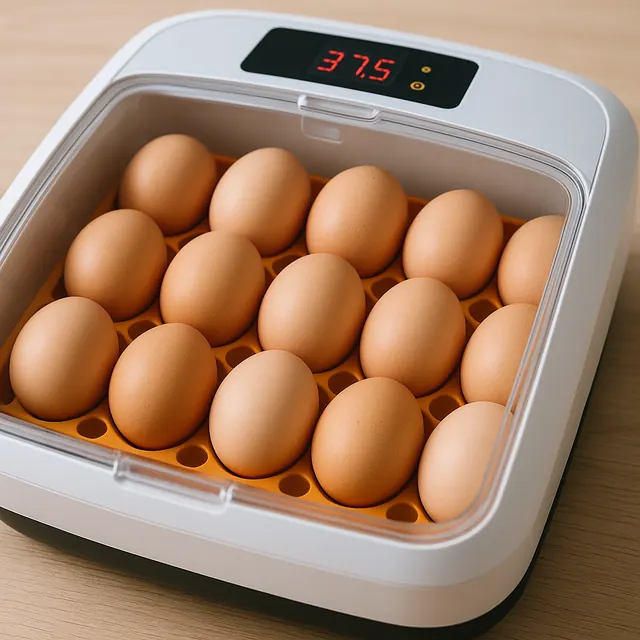
Why most store-bought eggs won't hatch
Two things stop a typical carton of supermarket chicken eggs from hatching. For the full breakdown, see our companion post, why most supermarket eggs never hatch.
No rooster, no chick
A hen lays an egg roughly every 24 to 26 hours whether or not she's mated. On large commercial egg farms, laying hens are kept without roosters, so the eggs are never fertilized. An unfertilized egg has no embryo and will never develop, no matter how long you incubate it.
Some free-range and pasture-raised farms keep a rooster or two with their flocks, so a few of their eggs may be fertile. Quail and duck producers often don't separate males and females as strictly, which is why those eggs show up again and again in successful hatch stories.
The cold fridge
Even a fertile egg can lose its chance in the cold. Refrigeration pauses embryo development, and a short chill doesn't always kill it. Breeders store hatching eggs cool, around 55–60°F, so they can set a whole batch at once.
A home or store refrigerator runs closer to 35–40°F, though. The longer an egg sits that cold, the more likely the embryo dies. That's a big reason grocery hatches are rare.
Washing matters too. In the US, commercial eggs are washed, which removes the natural "bloom," a coating that keeps bacteria out and slows moisture loss. Without it, an egg is more likely to spoil in the incubator.
Which store-bought eggs have the best odds?
If you want to try this, skip the cheapest dozen of large white eggs. Look for these instead, roughly from best odds to worst:
| Egg type | Odds of being fertile | Where to find them |
|---|---|---|
| Eggs labeled "fertile" | High | Some natural food stores, Trader Joe's (when stocked), co-ops |
| Quail eggs | Moderate to high | Asian, Latin and international grocery stores |
| Duck eggs | Moderate | Asian markets, specialty grocers, farmers markets |
| Farm-fresh / farmers market eggs | Moderate (ask if they keep roosters) | Farmers markets, farm stands, local farms |
| Pasture-raised / free-range chicken eggs | Low | Most supermarkets |
| Standard supermarket chicken eggs | Near zero | Every grocery store |
Pro tip: at a farmers market, ask the seller whether they keep a rooster with their hens. If they do, buy a dozen that haven't been refrigerated. That's the closest thing to real hatching eggs without ordering from a breeder.
How to hatch store-bought eggs, step by step
1. Buy the right eggs
Choose from the top of the table above, and buy more eggs than you think you need. Even with fertile eggs, expect a low hatch rate: one chick out of a dozen is a real win with grocery eggs.
2. Inspect and prep
Use clean, uncracked eggs with normal shapes. Don't wash them. Let refrigerated eggs come up to room temperature for 6 to 12 hours before they go into the incubator, so condensation doesn't form on the shell.
3. Set up your incubator
Run your incubator for at least 24 hours before adding eggs so temperature and humidity hold steady. A forced-air incubator (one with a fan) gives the most even heat. If you don't have one yet, see our incubator recommendations.
4. Turn the eggs
Eggs need turning so the embryo doesn't stick to the shell membrane. An automatic turner handles this for you. If you turn by hand, do it at least 3 to 5 times a day, always an odd number. Mark one side with an "X" in pencil to keep track.
5. Candle around day 7
In a dark room, shine a bright light through each egg. A developing egg shows a dark spot with spidery veins spreading out from it. A clear egg is either infertile or didn't survive the fridge, so remove it before it spoils. Our egg candling guide shows what to look for.
6. Lockdown
About three days before the expected hatch date, stop turning, raise the humidity, and keep the incubator closed. Opening the lid now can dry the membrane and trap a chick in its shell. Our incubator humidity guide covers how to hit the right numbers.
7. Hatch and brooder
Let chicks hatch on their own, which can take up to 24 hours after the first pip. Leave them in the incubator until they're dry and fluffy, then move them to a warm brooder with food and water. Use our hatch date calculator to know when to expect them.
Incubator settings for store-bought eggs by species
These are standard settings for a forced-air incubator. Still-air incubators usually run about 1–2°F warmer at the top of the eggs. Always follow your incubator manufacturer's instructions.
| Species | Temperature | RH to lockdown | RH at lockdown | Lockdown day | Hatch day |
|---|---|---|---|---|---|
| Chicken | 99.5°F (37.5°C) | 45–55% | 65–70% | 18 | 21 |
| Duck (most breeds) | 99.5°F (37.5°C) | 50–55% | 65–75% | 25 | 28 |
| Coturnix quail | 99.5°F (37.5°C) | 45–55% | 65–70% | 14–15 | 17–18 |
Muscovy duck eggs take longer, about 35 days, so ask the seller what breed you're buying. For species-specific detail, see our chicken, duck and quail incubation guides.
What are the real odds?
With ordinary grocery chicken eggs, your odds are close to zero. With fertile-labeled eggs, quail eggs, or duck eggs from the right source, people regularly get a chick or two out of a dozen. Most of the famous hatches above produced one to three birds from a full carton.
That's part of the fun: it's a cheap, low-stakes experiment and a great science project with kids. If you want reliable results, buy hatching eggs from a breeder, where fertility rates are much higher, and follow our step-by-step hatching guide.
Have a plan for the babies: if it works, you'll have live birds that need a brooder, heat and feed for weeks, then a coop. Some will be roosters or drakes, and many towns limit roosters. Check your local rules before you set the eggs.
Frequently asked questions
Can you hatch eggs from the grocery store?
Yes, but only if they're fertile. Most standard supermarket chicken eggs come from hens kept without roosters, so they can't hatch. Fertile-labeled eggs, quail eggs, duck eggs and farmers market eggs have much better odds.
Are store-bought eggs fertilized?
Most aren't. Commercial egg farms don't keep roosters with laying hens. Some free-range, pasture-raised, quail and duck eggs may be fertile, and some brands sell eggs specifically labeled "fertile."
Can you hatch Trader Joe's eggs?
People have hatched chicks from Trader Joe's eggs labeled "fertile." Regular Trader Joe's eggs without that label are very unlikely to hatch.
Can refrigerated eggs still hatch?
Sometimes. Cold pauses development, and breeders store hatching eggs at about 55–60°F. A typical refrigerator is colder than that, and the longer a fertile egg stays there, the lower its chances.
Can you hatch quail eggs from the grocery store?
Yes. Quail eggs from Asian and international markets are one of the most common sources of successful grocery hatches. Coturnix quail hatch in about 17 to 18 days.
How can I tell if a store-bought egg is fertile?
You can't tell from the outside. Incubate it for about 7 days, then candle it. Veins and a dark spot mean it's developing; a clear egg is infertile or didn't survive storage.
Is it safe to eat fertile eggs?
Yes. Fertile eggs that haven't been incubated look and taste the same as regular eggs and are safe to eat when stored and cooked properly.